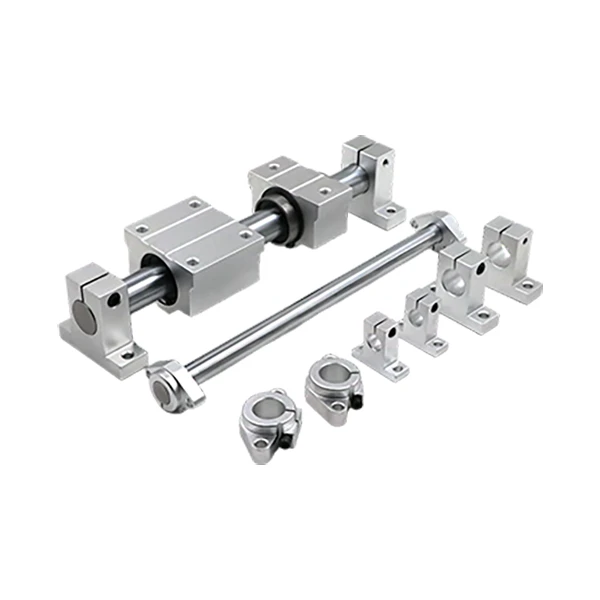
Standard structural steel rods flex under side loads and yield instantly when hit by rolling steel balls. Under normal carriage movement, soft steel lets the balls press micro-grooves straight into the metal, locking up the bearing block.
Precision linear shafts undergo induction heating to harden the outer steel skin down to 1.5 mm deep, holding surface hardness between HRC 60 and 64.
That hard outer shell is then ground smooth and plated with 15 to 30 microns of industrial hard chrome. The chrome layer fights atmospheric moisture corrosion, while the hardened sub-layer stops ball bearings from gouging the track, ensuring millions of smooth sliding cycles.
2. Shop Installation Practices: End-Support Alignment and Shaft DeflectionSupport Long Spans: Never leave long shafts hanging unsupported over wide frames. On spans exceeding 800 mm, add continuous aluminum support rails (SBR rails) underneath the shaft to stop mid-span sag from bending your bearing blocks.
Avoid Hammering Shaft Ends: Driving a tight-fitting shaft into a machine frame with a steel hammer mushrooms the precision-ground end and ruins the chamfer. Use a hydraulic press or tap softly through a brass drift pin.
Wipe Clean Regularly: Wipe chrome shafts down with a light film of machine oil rather than heavy grease. Thick grease attracts shop dust and fine chips, turning the lubricant into an abrasive paste that eats through rubber wiper seals.
A: The chrome skin has worn down or the bearings ran dry, so the steel balls are skidding flat against the rod instead of rolling. Put a micrometer on the worn section—if the diameter dropped below tolerance, swap the rod out right away.
A: Standard cutting tools will chip instantly against the HRC 62 hardened outer case. If you need custom cross-drilled holes or stepped ends, order pre-machined custom shafts or anneal local spots using specialized induction torches.
Match shafts to HRC 60 case hardness, support long spans to stop sagging, and keep chrome surfaces wiped with light machine oil—that fixes 90% of linear shaft wear and binding issues on automated equipment.