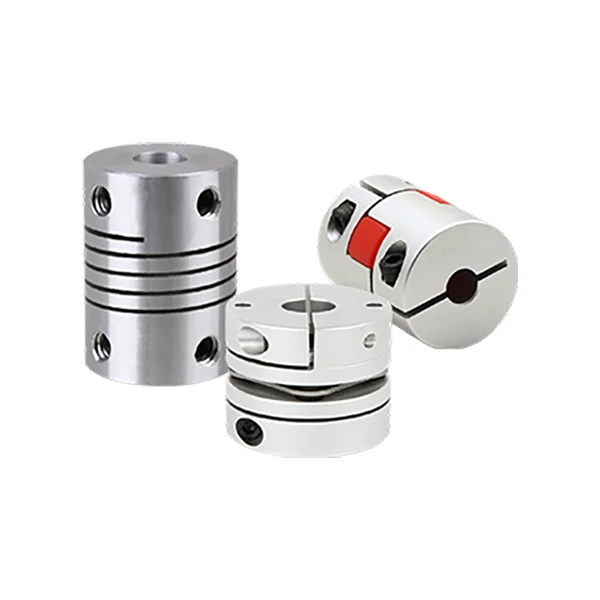
Checking coupling hardware before catastrophic failure stops unplanned downtime on CNC feed axes. Keep to this servicing rhythm on the shop floor:
Shift-Start Sound Sweep: Listen to the coupling housing during 1.5 G fast rapid passes. A high-pitched metallic click signals that a clamp bolt has backed out or a disc leaf has already cracked under bending fatigue.
Monthly Alignment Verification: Set a dial test indicator on the screw end and rotate the shaft by hand. Keep total radial runout under 0.01 mm and angular tilt under 0.5 degrees. If runout creeps up, the motor bracket or bearing seat has shifted on its dowel pins.
Quarterly Hardware Retorque: Put a calibrated torque wrench on the 10.9-grade clamp screws. Retorque every bolt to the specified rating stamped on the aluminum hub shoulder—never guess clamp tightness with a standard Allen key.
Never slide a new coupling onto a rust-covered or greasy shaft. Wipe all anti-rust oil off the motor shaft and screw journal using clean isopropyl alcohol before slipping the hubs on. Dry shaft surfaces give the split-clamp bore full friction grip, preventing the shaft from slipping and welding itself inside the aluminum hub.
Next, measure the gap between the internal hub shoulders with a feeler gauge. Pushing the hubs too close forces the disc pack to bulge outward, while pulling them too far apart puts the leaves under permanent tension. Keep the gap true to drawing dimensions so the stainless steel laminations flex naturally without pre-buckling.
Finally, inspect the pin holes on swapped-out disc packs under bright light. If you see oval stretching or reddish fretting dust around the reamed holes, the axis suffered severe parallel misalignment or frequent emergency-stop shock loads.
Quick Maintenance FAQA: The clamp bolts lost torque, allowing the motor shaft to micro-slip inside the hub bore when reverse torque peaks. Clean the bore, check shaft diameter tolerance, and pull the bolts back to full torque rating.
A: No. Once one leaf tears, the remaining leaves take localized bending stress and deform. Always swap out the complete factory-assembled disc pack and re-check shaft alignment.
Sweep shaft alignment monthly, pull clamp bolts to torque with a calibrated wrench, and keep shaft bores clean—that covers 90% of flexible coupling maintenance issues on CNC machinery.