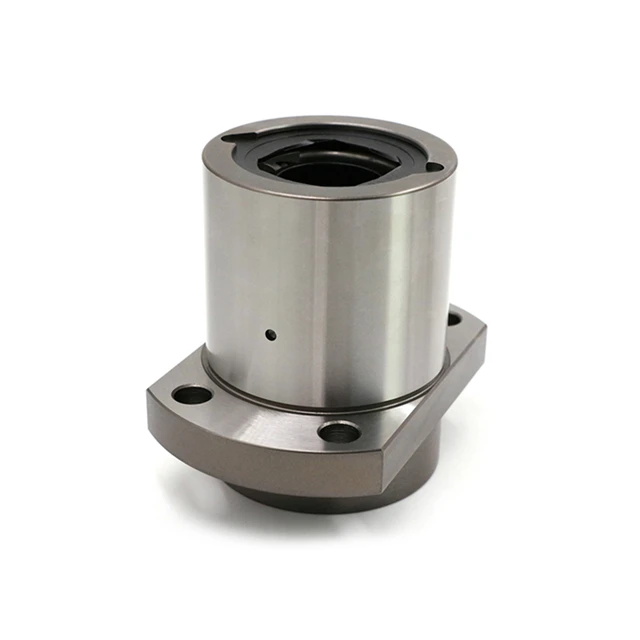
When a high-speed pick-and-place gantry or flying-cut axis vibrates at full travel, technicians often accuse servo motor tuning. The actual root cause is usually dynamic ball impact inside the SFE end-cap recirculating system.
SFE nuts use a large pitch-to-diameter ratio, using integrated end-cap deflectors to lift steel balls over the screw ridge. When the drive axis hits high RPMs, the balls smash into the deflector tongue with tremendous dynamic force. If the shaft bows slightly or chip dust enters through an unsealed wiper, steel balls jam at the turn.
That jam forces the trailing balls into a solid line, building up hydraulic pressure that snaps the composite end-caps clean off the nut body and locks the feed axis solid.
2. Shaft Straightness, End-Bearing Torque, and High-Speed Lube RulesCheck screw shaft straightness on V-blocks using a dial test indicator before dropping it into the machine bed. Keep shaft runout under 0.012 mm per meter—if you install a bowed shaft, high-speed rotation will create severe whipping that destroys end bearings within days.
Next, torque the fixed-end angular contact bearing locknut with a calibrated torque wrench. Pull the locknut down to 20 N.m and apply threadlocker directly to the threads. Leaving any end-play in the bearing housing allows the large-lead screw to screw itself back and forth under sudden stops.
For lubrication, never use thick, tacky heavy-duty grease on high-speed SFE nuts. Inject NLGI Grade 1 or 2 high-speed synthetic grease through the nut oil port every 150 operating hours, or feed continuous ISO VG 32 to 46 spindle oil. Heavy grease drags the balls at high RPM, creating friction heat that melts composite deflectors.
3. Quick Troubleshooting FAQA: SFE nuts move the carriage much farther per shaft revolution, letting you hit high linear speeds (like 60 m/min) while running the motor at lower, safer RPMs. That stops long screw shafts from hitting critical whipping speeds.
A: Two main reasons: someone ran the axis past the recommended RPM limit, making steel balls smash the deflector entry, or fine chips bypassed worn wipers and jammed the return channel.
Keep long shafts spun straight, use light synthetic lube for high RPMs, and check end wipers regularly—that handles 90% of SFE large-lead ball screw failures on fast automation axes.