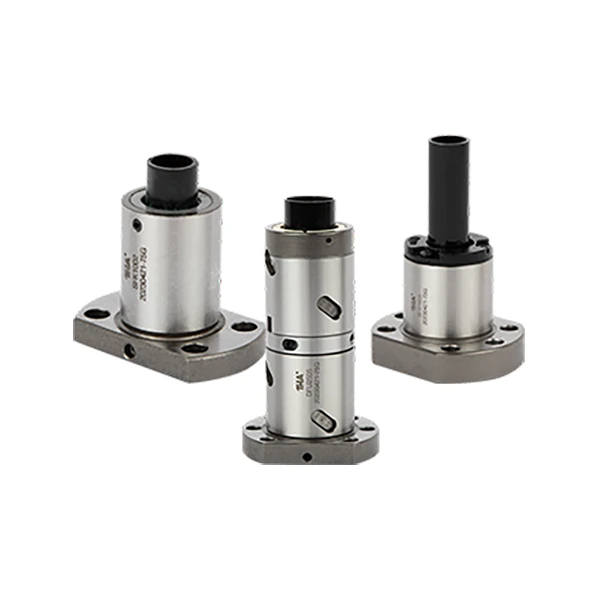
Standard ball screws push load through single points where steel balls ride inside gothic raceways. Under heavy stamping blows or continuous multi-ton pressing, those contact points squeeze hard enough to flatten balls and shell out thread flanks.
Planetary roller screws drop the recirculating balls entirely. Instead, a ring of threaded steel rollers sits around the main spindle, locking into the screw threads with long line contact that triples your contact footprint.
That line contact pumps up your dynamic load rating way past equal-size ball screws. When your press hits sudden die-stamping shocks, the shaft absorbs the impact without denting or brinelling the thread flanks.
2. Shaft Straightness, End-Bearing Setup, and High-Load Lube RulesDialing In Alignment: Lock down your fixed-end bearing seat first. Sweep the roller screw shaft with a dial indicator and keep runout under 0.008 mm per meter so you do not scuff up the threads.
Nut Preload Control: Preloaded roller screw nuts use precision-ground spacers to hold zero backlash. Never force a roller nut past a tight frame shoulder—any axial misalignment pinches the planet gears and locks up the roller assembly.
EP Grease Selection: High-tonnage pressing drives demand heavy oil films. Inject synthetic NLGI Grade 2 lithium grease containing high-viscosity base oil and EP additives through the nut ports every 100 operating hours.
A: There are no recirculating balls or plastic return caps to blow out. The planetary rollers ride smooth inside a ring gear, taking high motor RPMs without balls smashing into return paths.
A: No. Slide-way oil wipes off under heavy tons of pressing force. Use high-viscosity synthetic oils (ISO VG 220 to 460) or heavy EP lithium grease to prevent metal-to-metal contact along the roller lines.
Match your press tons to line-contact specs, keep shaft runout under 0.008 mm, and use high-viscosity EP lube—that handles 90% of planetary roller screw integration steps on heavy servo drives.