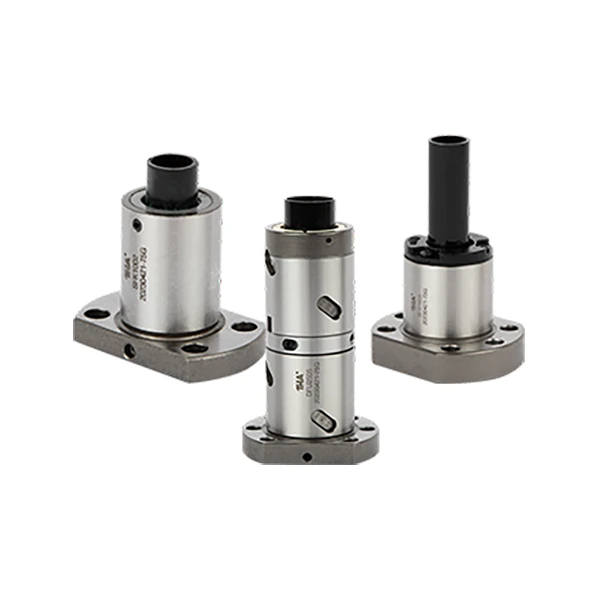
SFU single nuts pack oversized steel balls straight into a gothic-arch raceway to hold axial play under 0.02 mm. Because everything is crammed into one compact nut body, the overall package stays short and spins with very little starting drag. That low resistance keeps stepper motors running cool and prevents random stalls during fast rapid passes.
DFU double nuts slide a ground spacer shim right between two separate nut bodies, wedging the ball rows against opposing raceway walls to cancel out all backlash. But that extra rigidity adds mechanical friction and doubles your nut length, eating up precious Z-axis stroke on compact machine frames.
If your spindle is light—say, under 3.0 kW cutting timber, plastics, or sheet aluminium—an SFU single nut handles the cutting thrust easily without dumping unnecessary heat into your motors.
2. Axis Integration, Support Bearing Setup, and Maintenance RulesWhen installing an SFU ball screw assembly, keep your fixed-end angular contact bearings locked down first. Mount a dial indicator on the nut body, run the screw end-to-end by hand, and check that shaft radial runout stays under 0.01 mm. Forcing an unaligned SFU screw into a crooked gantry plate bends the screw journal, causing localized thread wear that creates loose slop within months.
Next, set up your lubrication path. Push NLGI Grade 2 lithium grease into the nut oil port every 150 hours of operation. Never run an SFU nut dry—without an oil film, steel balls skid against the Gothic tracks, chewing up thread flanks and turning low backlash into heavy Z-axis drop.
In dusty wood or composite routing setups, check the plastic end wipers weekly. Sawdust entering the nut packs the internal return tubes solid, causing steel balls to jam and pop the plastic return caps right out of the nut body.
3. Quick Selection FAQA: Not naturally. SFU nuts rely on clearance fit or light oversized-ball preloading (P1). For tight metal milling tolerance (under 0.01 mm), upgrade to a DFU double nut or a spring-preloaded single nut to stop tool chatter under reversing cuts.
A: SFU single nuts have very low friction, meaning high-lead screws (like 10 mm or 20 mm pitch) will back-drive under spindle weight. Always install a motor brake or a counterweight cylinder on vertical axes running SFU screws.
Match your cutting loads to the nut profile, keep fixed-end bearings aligned with a dial indicator, and wipe sawdust off the screw shaft—that handles 90% of ball screw selection and life issues on CNC automation axes.