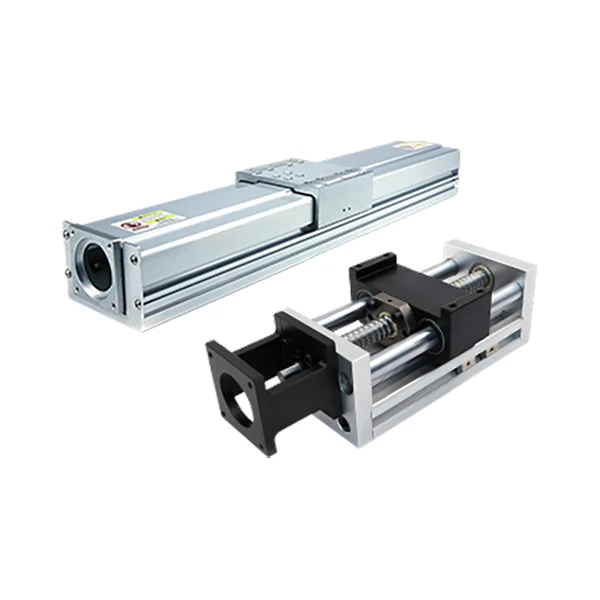
1. Ball Screw vs. Timing Belt Linear Modules
Linear stages generally split into ball screw drives and steel-reinforced timing belt drives. Ball screw actuators deliver repeat accuracy down to 0.01 mm and push heavy payloads without flexing, making them the standard pick for Z-axis vertical drops, pressing stations, and precision dispensing heads.
Belt-driven stages trade away axial thrust for sheer speed, easily clearing 2000 mm per second across long 3-meter transfer spans. Because belts stretch slightly under sudden braking, keep belt modules for lightweight pick-and-place gantries and packaging lines rather than rigid machining tasks.
Integrating the linear guide tracks directly into the extruded aluminum base gives both styles higher torsional stiffness than bolted-on rail assemblies. That U-channel profile resists twisting when your tooling hangs off to one side of the carriage.
2. Shop Mounting and Multi-Axis Squaring HabitsBolt onto Flat Reference Plates: Never clamp a long linear stage across uneven structural tubing without shimming. An aluminum extrusion base will conform to whatever crooked frame sits underneath it; sweep the mounting pad flat within 0.05 mm before torquing the base clamps.
Set Master and Slave Parallelism: When running two parallel stages to carry a wide bridge, bolt down the motor-driven master stage first. Leave the passive slave stage bolts loose, jog the bridge from end to end three times so the carriage finds its natural track, then lock the slave clamps down from the center outward.
Grease Through Side Port Fittings: Semi-sealed linear modules hide the ball nut and guide blocks beneath a stainless steel strip cover. You do not need to strip the top cover off for routine service—pump NLGI Grade 2 lithium grease into the external side grease ports every 150 operating hours.
A: You pinched the aluminum base profile by over-torquing mounting bolts over an uneven frame spot. Loosen the base clamps one by one until the carriage glides freely by hand, then slip thin brass shim stock under the low mounting points.
A: Yes, as long as you keep the payload within the module's inverted radial load rating. Hanging heavy tooling upside down pulls directly against the ball retainer grooves, cutting allowable moment load by roughly 30 percent compared to upright mounting.
Sweep mounting frames flat before bolting, self-align passive slave stages by jogging the bridge, and grease through the side ports—that prevents most binding and accuracy drift on modular linear actuators.